Design
  Residential
  Commercial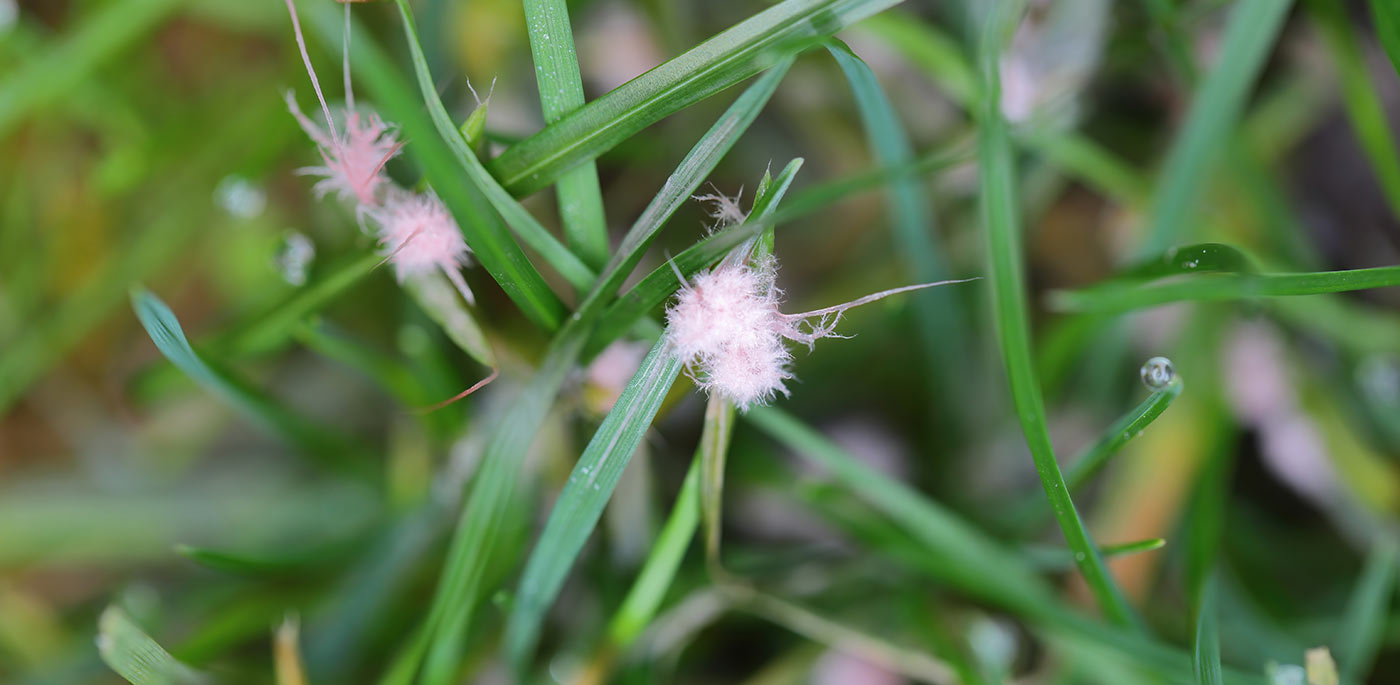


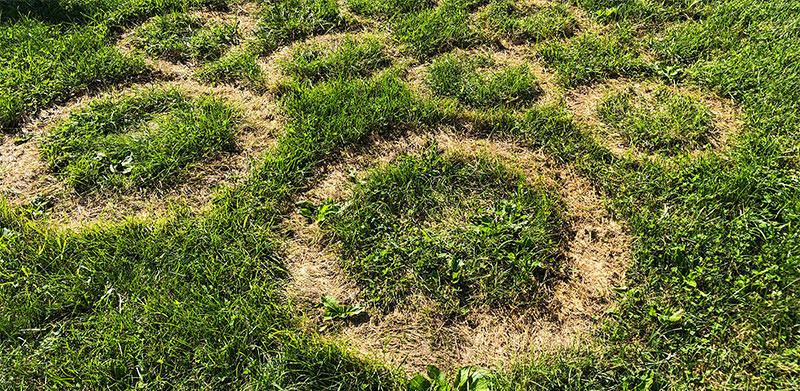
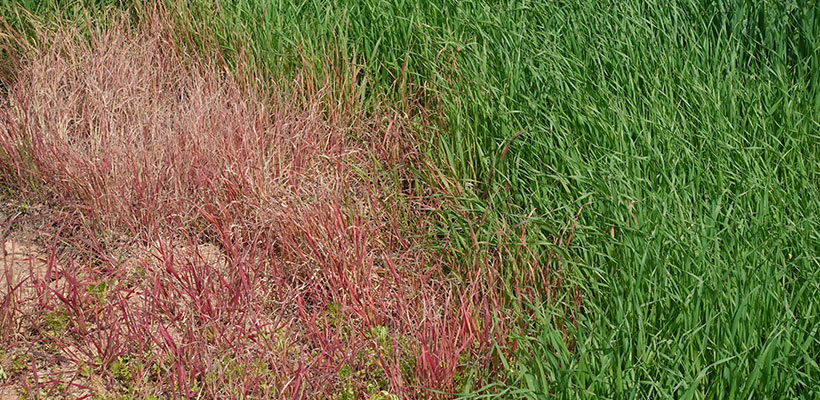
Sometimes the lawn in northern Illinois can start to look a little ragged even though you are diligently keeping up with your mowing and watering. Patches can sometimes turn a light tan or pinkish color and if you look really closely, you might notice reddish threads on the grass tips.
That is Red Thread.
It looks worse than it is, but it is still a sign that your lawn needs a little help. Here is what is going on and what you can do about it.
What is Red Thread?
Red Thread is a turf disease caused by the fungus Laetisaria fuciformis. It lives in thatch and soil and shows up on grass during the cool season in northern Illinois. The fungus actually attacks the leaves, not the roots. That is why lawns usually recover when conditions improve and new growth comes in.
Red thread usually does not kill the plant; it damages leaves. When the grass starts growing again, new blades hide the damaged ones and the lawn fills back in.
When does Red Thread show up?
- When weather is cool and damp, often during spring and fall
- When grass stays wet for excessive periods of time
- When weather conditions lead to dew
- When lawn is underfed or stressed
How can I tell if it's Red Thread?
- The patches are an irregular looking tan or pinkish color
- The area looks ragged compared to the rest of the lawn
- Up close, the tips of grass appear bleached
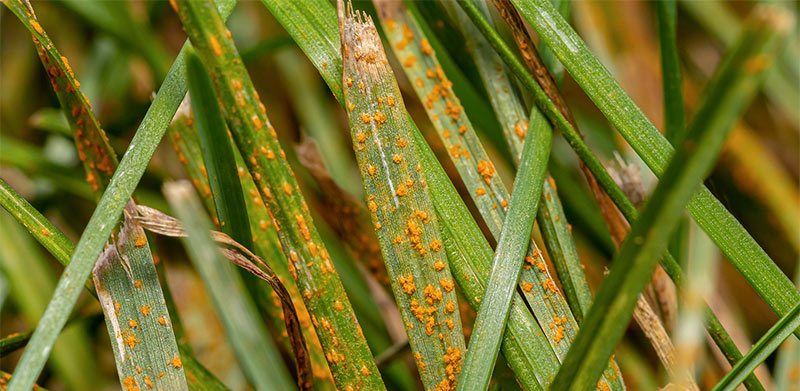
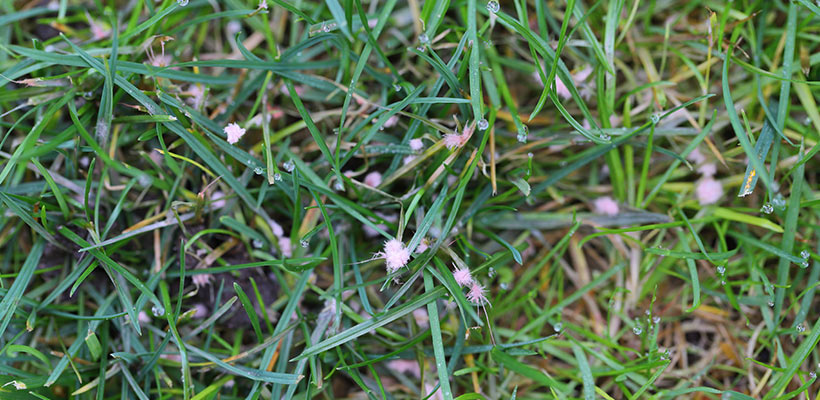
- You see fine red or pink threads sticking off leaf tips
- You notice small cottony or web-like pink growth
Those reddish threads are the fungal growth. You often see them on cool, wet mornings. When the lawn dries, the threads can be harder to spot, but the faded patches remain. Red thread usually does not kill the plant; it damages leaves. When the grass starts growing again, new blades hide the damaged ones and the lawn fills back in.
Will Red Thread kill my lawn?
Fortunately, Red Thread is more cosmetic than deadly. However, it can have unfavorable consequences.
- It can thin the leaf canopy
- It makes the lawn look off-color for several weeks
- It can weaken stressed turf if it keeps coming back
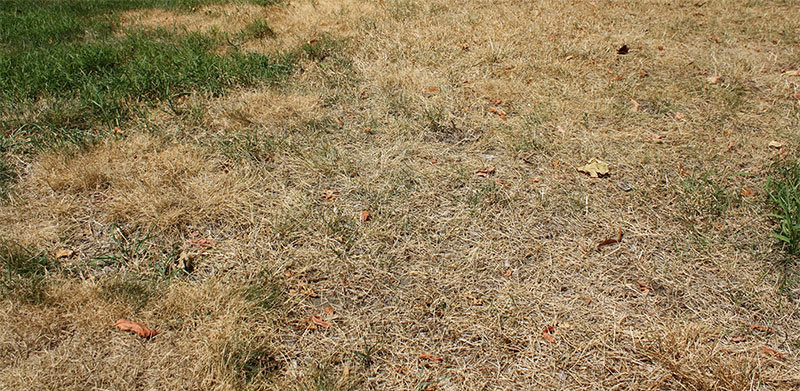
Because roots are usually not destroyed, the lawn can recover, especially if you give it what it needs. If the turf is already very thin or under drought stress, Red Thread can be the last straw that makes the yard look worse, but it is rarely the only problem. Think of it as a warning, not a total breakdown.
What can I do right now?
If you see Red Thread in your yard, here are practical steps to take.
1. Review your mowing procedures, but don't alter your schedule.
- Use a sharp blade for clean cuts
- Avoid mowing when the grass is wet
- Keep grass three inches high
It's not advised to lower the mower to attempt to remove infected leaves. That will only shock the lawn and expose the crowns to stress.
2. Adjust your watering schedule to avoid prolonged wetness
- Water deeply and less frequently
- Water in the early morning hours
- Let the grass dry between waterings
Remember, fungus loves moisture. Don't make it easy for Laetisaria fuciformis to breed.
3. Support the lawn with proper nutrition
- Adhere to a regular feeding schedule
- Use the right amount of nitrogen
- Feed in the fall for root strength
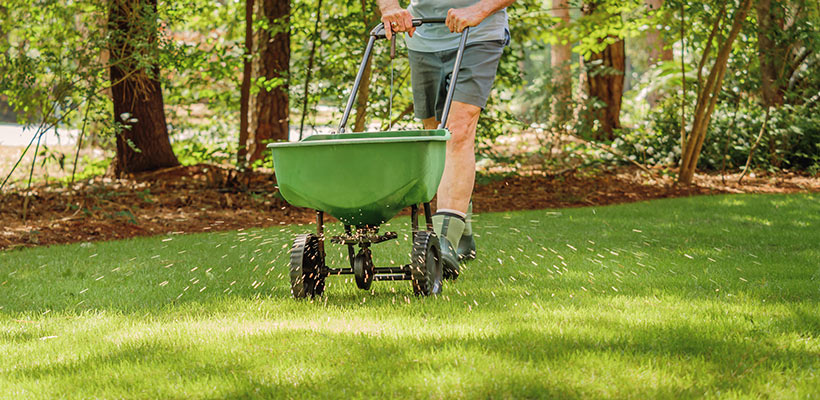
Red Thread is common in lawns that are a little low in nitrogen. A balanced fertilizer program, especially in spring and fall, helps turf outgrow the damage and resist future outbreaks. Be advised, however, that this does not mean you should dump a heavy dose of fertilizer all at once. If you already have a professional program in place, Red Thread can be an indication that the lawn is ready for its next planned application, not an extra random one.
4. Reduce thatch and improve airflow
- Be sure to aerate your lawn, especially in the fall
- Rake thatch when necessary, but only when the grass is dry
- Prune overhanging plants that trap moisture right above the turf
A thick thatch layer and dense shade hold moisture at the leaf surface. If your lawn feels spongy or you see a heavy brown layer between the soil and grass, consult a lawn care professional on how to improve airflow, which will help your lawn dry faster after rain or dew.
Do I need fungicide?
Most lawns in northern Illinois can survive Red Thread without fungicide if certain things are practiced. Here's when to consider fungicide:
- Red thread is severe and affects large areas
- The lawn has a history of repeated outbreaks
- The turf is highly valuable and highly visible
Overall, fungicides work best when they're part of a broader plan. While they can suppress the fungus for a time, the problem can return if watering, mowing and nutrition are neglected. For most homeowners, you're better off strengthening the lawn as a whole rather than chasing red thread with sprays alone.
How can I prevent future outbreaks?
- Stick to your fertilization plan
- Water in the morning, but only when needed
- Keep a three-inch mowing height
- Keep your mower's blades sharp
- Aerate your soil when compacted
Remember, Red Thread can still appear in perfect weather conditions, but it will be lighter and your lawn will recover faster.
When should I ask for help?
If you are not sure whether you are dealing with actual Red Thread, reach out to LawnCare by Walter because it could be another disease, drought stress, or an infestation.
- LawnCare by Walter will confirm what is causing the patches
- LawnCare by Walter will review how you currently mow, water and fertilize
- LawnCare by Walter will recommend a tailored lawn care plan
Remember, Red Thread is your lawn's way of saying it could use a little attention—not that you have failed as a homeowner. With a few adjustments and some patience, those pink patches can become a thing of the past.
 Max 6 min read